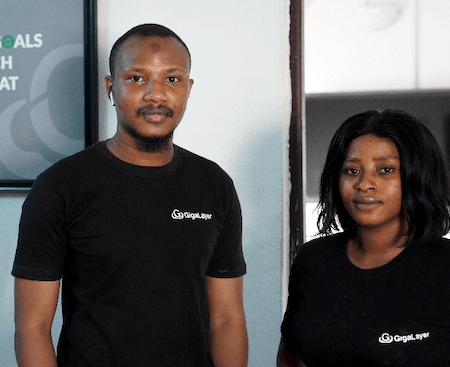

A new player is emerging in Africa’s rapidly evolving tech ecosystem, promising to democratize AI infrastructure across the continent. Yamify, a DR Congo-based startup, has secured $100,000 in pre-seed funding from Felix Anane, the early Paystack backer, to build what could become Africa’s default AI infrastructure platform.
The African AI Infrastructure Gap
The global AI infrastructure market has largely been built for enterprise teams in the U.S. and Europe, creating significant barriers for African developers. Traditional cloud AI services assume access to in-house cloud engineers, bill in dollars, and operate from distant data centers—creating a fundamental mismatch with Africa’s cost-sensitive but rapidly growing developer market.
Yamify’s founder, Luc Okalobé, a former cloud engineer at TikTok and Salesforce with over 15 years of experience, identified this gap as a massive opportunity. “Africa should not wait to be included in the AI wave – we should build it,” Okalobé stated. “At Yamify, we believe in community-led AI infrastructure made for Africa and the world.”
The “App Store for AI” Approach
Yamify operates with a unique positioning: an app store for AI tools—chatbots, automation agents, video generators, and language models—but with the server infrastructure included. The platform’s GPU-powered clusters, dubbed “YAMs,” are strategically hosted across Nigeria, Congo, and South Africa, with global cloud providers serving as backup infrastructure.
This localized approach addresses several critical pain points for African developers:
Geographic Proximity: Reduced latency from local data centers improves application performance and user experience.
Currency Accessibility: Instead of expensive dollar-denominated SaaS licenses, users can pay in local currencies including naira, M-Pesa, or MTN MoMo.
Open Source Focus: Users access unrestricted open-source editions rather than limited proprietary tools, providing greater flexibility and cost efficiency.
Innovative Managed Cloud Prototypes
The fresh funding will primarily support the launch of Yamify’s flagship Managed Cloud Prototypes (MCP) feature. This innovative tool allows users to describe their desired AI application in a simple chat window and have it provisioned instantly—transforming what traditionally takes days of configuration into a minutes-long process.
This approach dramatically lowers the technical barrier to AI deployment, making advanced tools accessible to freelancers, startups, and agencies without deep cloud engineering expertise.
Competitive Positioning and Strategy
Yamify enters a competitive landscape dominated by established players like Lambda, CoreWeave, and hyperscalers including AWS, Google Cloud, and Azure. However, the company is pursuing a distinctly different strategy focused on grassroots market development.
Rather than chasing enterprise sales, Okalobé’s approach emphasizes community building through hackathons, developer groups, and universities. “We go after people who don’t know AWS exists,” he explained. “We help them launch their first chatbot or automation and grow with them.”
This developer-first strategy differentiates Yamify from competitors like YC-backed Cerebrium, which raised $8.5 million for enterprise AI model training platforms. While Cerebrium targets scalable enterprise solutions, Yamify focuses on community-led, accessible AI infrastructure.
Technical and Economic Advantages
Yamify’s competitive edge stems from several technical and economic factors:
Cost Optimization Expertise: The team’s deep experience in cloud cost optimization, utilizing open-source infrastructure like Kubernetes, provides significant cost advantages.
Automated Resource Management: Unlike hyperscalers that leave idle workloads running, Yamify automatically detects and shuts down unused resources. “Hyperscalers don’t turn things off for you. We do,” Okalobé noted.
Open Standards: Leveraging Kubernetes and open-source tools reduces vendor lock-in while maintaining flexibility and cost efficiency.
Local Billing Integration: Native support for African payment systems eliminates currency conversion costs and friction.
Market Traction and Growth Trajectory
Since entering private beta in July 2025, Yamify has demonstrated strong early traction across key African markets including Lagos, Kinshasa, Brazzaville, and Johannesburg. The platform has attracted diverse customers ranging from developers and fintechs to web agencies.
Current metrics highlight growing market demand:
- 1,500+ developers and startups on the waitlist
- Notable customers include Vaultpay.io (Y Combinator 2023)
- Pricing strategy starts at $15 monthly for individuals and $500 annually for agencies
- Free tiers available for testing and experimentation
Ambitious Growth Targets
Yamify has set aggressive but achievable growth targets reflecting the company’s confidence in market demand:
Six-month goal: Onboard 100,000 users across the platform Long-term aspiration: Achieve $1 million in annual recurring revenue while establishing reputation as Africa’s default AI infrastructure layer
The company is currently seeking an additional $100,000 to close its pre-seed round, which will support scaling operations to meet these ambitious targets.
Broader Ecosystem Impact
Yamify’s emergence reflects a broader trend of African startups building foundational infrastructure for the continent’s digital economy. By providing accessible AI infrastructure, the platform could accelerate innovation across multiple sectors including fintech, e-commerce, and digital services.
For Okalobé, success extends beyond financial metrics: “If developers are telling others, ‘Yamify helped me launch this,’ then we’ve already won.”
This community-centric approach positions Yamify not just as a service provider, but as a catalyst for Africa’s AI ecosystem development—potentially enabling the next generation of African AI-powered startups to compete globally while building locally.
As Africa’s developer community continues expanding, platforms like Yamify could prove instrumental in ensuring the continent doesn’t just participate in the global AI revolution, but helps shape its future.