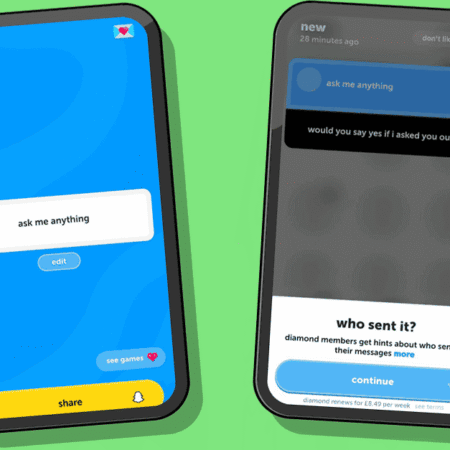

The Federal Trade Commission has cracked down on Sendit, a once-popular anonymous messaging app that captivated Gen Z users, accusing the company of illegally harvesting children’s personal information, manipulating users with fabricated messages, and using deceptive tactics to push paid subscriptions.
Sendit allowed mostly teenage users to exchange anonymous questions through Instagram, TikTok, and Snapchat integrations. The app surged in popularity after similar platforms YOLO and LMK were removed from Snapchat in 2021 following a tragic lawsuit linked to a child’s death. Sendit quickly filled the void, racking up 3.5 million downloads as teens searched for alternatives.
However, according to the FTC’s complaint, the app’s success was built on questionable practices. Sendit allegedly bombarded users with fake, attention-grabbing messages designed to spark curiosity—questions like “would you ever get with me?” or “have you done drugs?” These weren’t from real people but generated by the app itself.
To discover who supposedly sent these messages, users could purchase a “Diamond Membership” for $9.99. But here’s the catch: the FTC claims the app failed to clearly disclose that this was a recurring weekly charge, not a one-time payment. Even worse, when users paid to reveal the sender of these fake messages, they received false information.
The complaint also alleges serious privacy violations. Sendit knowingly collected data from over 116,000 users who identified as under 13 years old without obtaining parental consent—a direct violation of the Children’s Online Privacy Protection Act (COPPA). Despite being aware of these underage users in 2022, Sendit’s parent company, Iconic Hearts, never notified parents or requested permission to collect their children’s data.
The controversy doesn’t end there. Previous investigations revealed that Sendit marketed itself as “Sendit Reveal” on Instagram, promising to expose anonymous message senders—a claim users quickly discovered was misleading, based on numerous App Store complaints.
When questioned about these practices in 2022, Sendit founder Hunter Rice dismissed concerns as clickbait hunting, insisting the company was doing “great things.” Ironically, Sendit later sued competitor NGL for allegedly copying its fake message strategy, though NGL was eventually forced to abandon the practice to stay on the App Store.
This case serves as a stark reminder of how quickly popular apps can exploit young users’ trust for profit, and why regulatory oversight matters in protecting vulnerable audiences online.